Platform Selection Matrix
An analytical, phase-by-phase approach to choosing where to build your audience based on niche, timeline, and the 'rent vs. own' philosophy.
Matching Format to Audience Maturity
The most common trap for early-stage creators is the illusion of omnipresence. When you try to post on Instagram, YouTube, Twitter, LinkedIn, and a blog simultaneously from day one, you do not build a massive audience—you build massive burnout.
Not all platforms are created equal. They possess fundamentally different algorithmic behaviors, audience expectations, and monetization timelines. To scale efficiently, your platform choice must be a calculated business decision that matches your specific content format and the current maturity of your audience.
1. The “Rent vs. Own” Philosophy
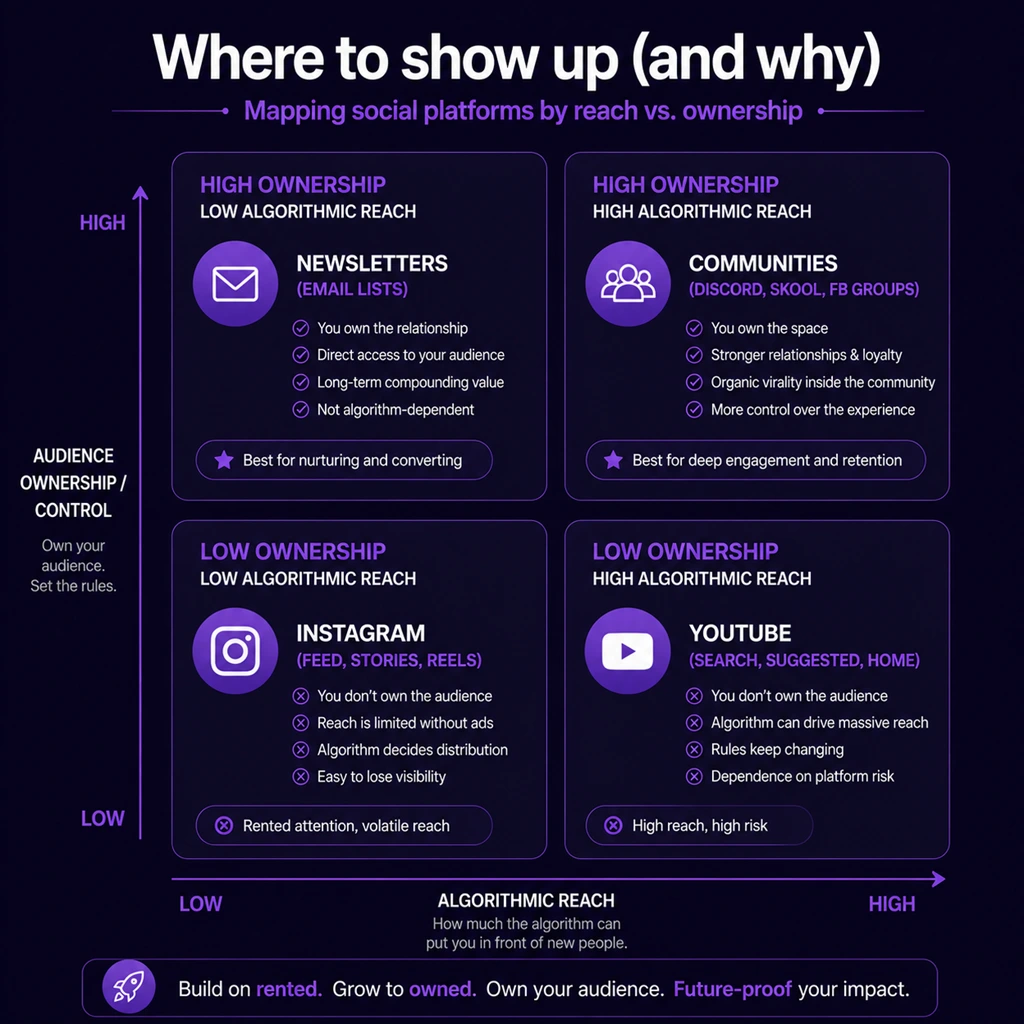
Before selecting an application, you must understand the underlying digital real estate model. Social platforms are rented land. You do not own your followers; the platform’s algorithm does. A single update to their code can instantly throttle your organic reach by 50%.
To build a durable creator business, you must operate with a funnel mindset: use rented platforms to attract attention, and immediately siphon that attention into owned platforms.
- Rented Platforms (Discovery): Instagram Reels, YouTube Shorts, Twitter/X timelines, LinkedIn feeds. These platforms prioritize viral reach and finding new eyeballs.
- Owned Platforms (Retention): Email newsletters, private WhatsApp/Telegram channels, or a dedicated creator application (like a customized Growwh community or Sitey platform). Here, you control the distribution, the data, and the direct line of communication without an algorithm filtering your message.
2. Platform Breakdown: Choosing Your Primary Engine
If you are starting from zero, pick exactly ONE discovery platform to master. Your choice should be dictated by your specific niche and your operational strengths.
Instagram (The Discovery Engine)
Instagram is the ultimate top-of-funnel billboard. With features heavily optimized for short-form video (Reels), it offers the fastest potential for raw audience acquisition in the Indian market.
- Strengths: Rapid viral reach, visually driven, highly integrated with the Indian influencer marketing ecosystem for early brand barter deals and sponsorships.
- Weaknesses: Extremely short content shelf-life. A Reel is practically dead 48 hours after posting. It requires relentless, continuous output to maintain momentum.
- Best Fit For: B2C niches, fashion, fitness, quick financial tips, and highly visual entertainment.
YouTube (The Search Engine)
YouTube operates more like a massive television network combined with a library. Unlike short-form feeds, YouTube is a search engine.
- Strengths: Evergreen content. A well-optimized technical tutorial or deep-dive video can continue driving views, subscriber growth, and AdSense revenue years after it is published. It builds the highest level of parasocial trust.
- Weaknesses: High barrier to entry. Audiences expect higher production value, structured scripting, and clear audio. Growth is typically a slow burn for the first 6 to 12 months.
- Best Fit For: Complex B2B niches, coding/developer tutorials, comprehensive product reviews, and long-form storytelling.
Newsletters & Private Communities (The Storefront)
This is your ultimate destination. You do not start here; you transition here.
- Strengths: Absolute control. When you send an email or a push notification to a private community, it reaches the user. This environment yields the highest conversion rates for selling digital products, SaaS tools, or cohort courses.
- Weaknesses: Zero organic discovery. Algorithms do not push newsletters to new audiences. You must actively route traffic here from your Instagram or YouTube.
- Best Fit For: Any creator who has crossed the threshold of their first 1,000 true fans and is ready to monetize deeply.
3. The Phased Expansion Plan
Do not attempt to be everywhere until your systems can handle the bandwidth. Follow this chronological roadmap for platform expansion:
Phase 1: The Monogamy Stage (Months 1–6)
- Action: Commit 100% of your production energy to one single Discovery platform (e.g., Instagram Reels).
- Goal: Establish your niche authority, train the algorithm on your target demographic, and refine your on-camera presence or writing style without the distraction of formatting for multiple apps.
Phase 2: The Capture Stage (Months 6–12)
- Action: Maintain your primary Discovery platform, but introduce one Owned platform (e.g., a weekly email newsletter or a free WhatsApp community).
- Goal: Begin converting your rented audience into an owned asset. Use lead magnets (free templates, resources) promoted on your primary platform to capture emails or phone numbers.
Phase 3: The Hub-and-Spoke Expansion (Year 2+)
- Action: Now that your primary platform and your community capture are automated and generating predictable metrics, introduce a secondary Discovery platform.
- Goal: Implement a repurposing system. Take your deep-dive YouTube videos (Hub) and slice them into short-form clips for Instagram and text threads for LinkedIn (Spokes).
By strictly pacing your platform integration, you build a resilient, cross-platform ecosystem where each channel serves a distinct, strategic purpose in your audience’s journey.
Get paid monthly. Free to join.