Content That Converts
Learn how to stop chasing empty views and build a strategic content mix that drives both massive reach and high-ticket sales.
A strategic framework for turning attention into sales
Viral trends build followers; educational intent builds buyers.
If your goal is to build a sustainable creator business—whether you are selling digital products, consulting, or a recurring software subscription—you must stop chasing vanity metrics and start designing content that converts. A million views mean absolutely nothing if they do not translate into a single sale, email subscriber, or community member.
1. The Two Types of Content
To build a funnel that works, you must understand that not all content serves the same purpose. Your strategy must be divided into two distinct psychological buckets:
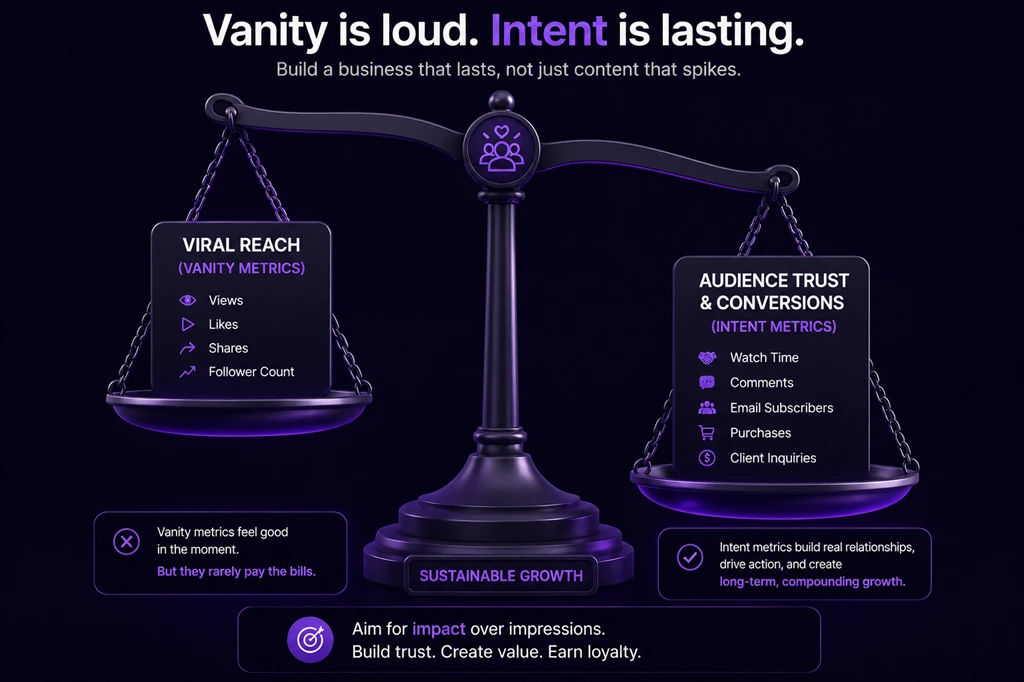
- Vanity/Reach Content: This includes trending audio, relatable industry memes, and broad observational humor. It gets high views and high shares. Its only job is top-of-funnel discovery—it brings new eyeballs to your profile.
- Intent/Depth Content: This includes step-by-step tutorials, comprehensive case studies, and behind-the-scenes architectural breakdowns. It gets lower total views, but incredibly high saves and high trust. This is the content that converts followers into customers.
2. The Trap of the “Viral Only” Creator
Many creators mistakenly believe that if they just get enough eyeballs, the monetization will naturally figure itself out. This leads to the “Viral Only” trap.
If a creator goes viral for a funny dance, they might quickly gain 50,000 followers. But if they then launch an ebook on coding, zero people will buy it. Why? Because the audience followed them for a quick hit of dopamine, not for technical solutions.
Even your reach content must align with your core business offering. If you plan to sell a Website-as-a-Service (WaaS) product to solo entrepreneurs, going viral for a generic pop-culture meme hurts your algorithm. Instead, you need to go viral for a relatable joke about the pains of managing freelance clients or dealing with slow website hosting. Your reach content must still align tangentially with your core niche.
3. Structuring for Conversion: The PAS Framework
When you post Intent/Depth content designed to sell a product or service, you cannot just drop a link and hope for the best. You must map your content backward using a psychological framework that naturally leads to your offering.
The most effective structure for this is the PAS (Problem, Agitation, Solution) framework:
Step 1: Establish the Problem
Immediately call out the specific pain point your target audience is facing right now. This acts as an ultra-specific hook.
- Example: “Why your client’s WordPress sites are loading incredibly slowly and costing you retainers.”
Step 2: Agitate the Problem
Do not solve it right away. Twist the knife. Explain the hidden costs of ignoring this problem. Show them the data.
- Example: “Slow websites lose 40% of customers before the page even loads, meaning your clients are burning their ad spend and blaming you for the lack of conversions.”
Step 3: Introduce the Solution
Once the pain point is fully established and agitated, introduce your product or service as the logical, immediate next step.
- Example: “To fix this, you need a headless architecture. Use my custom caching template and deployment guide to drop load times under 1 second.”
By engineering your content around the specific problems your premium community or software solves, you filter out the passive scrollers and highly engage the buyers.
Get paid monthly. Free to join.